
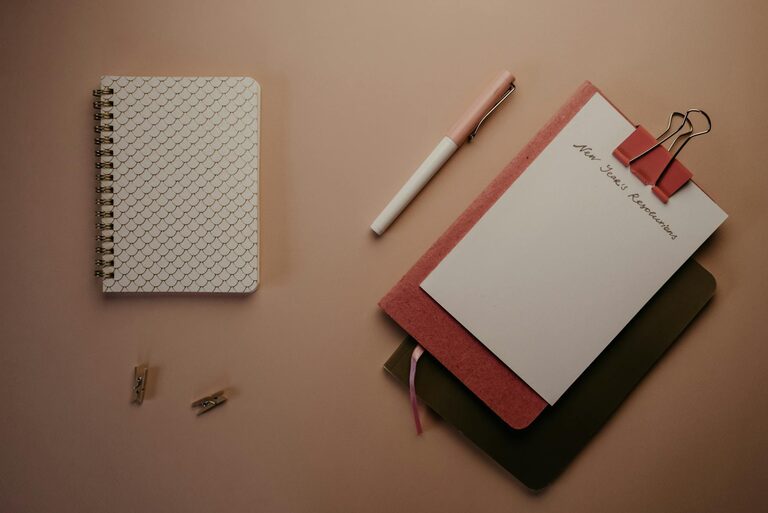
Choosing the perfect notebook might seem like a simple task, but with so many options available, it can quickly become overwhelming. Whether you want a notebook for jotting down ideas, keeping a journal, or organizing daily tasks, selecting one that you’ll actually use matters. The right notebook can boost your creativity and productivity, while the wrong one might end up gathering dust. This guide will walk you through the key factors to consider to help you pick a notebook that truly suits your lifestyle and preferences.
Why Choosing the Right Notebook Matters
A notebook isn’t just a stack of paper — it’s a tool for capturing thoughts, planning projects, and cultivating habits. When a notebook feels good to use, it encourages regular writing. On the other hand, a poorly chosen notebook might discourage you, making the creative or planning process frustrating.
Think of your notebook as an extension of your workflow or personal style. When the format, size, and paper quality align with your habits, you’re more likely to keep using it every day.
Step 1: Identify Your Purpose
Before shopping, clarify how you intend to use your notebook. Different uses call for different features.
– Journaling: You might want a notebook with lined pages and a durable cover to protect your personal thoughts.
– Sketching or doodling: Blank or dotted pages give more creative freedom.
– Note-taking: Gridded or dotted layouts help keep information structured.
– Planning: Weekly or monthly planner formats include calendars useful for scheduling.
– Bullet Journaling: Dot grids with durable binding make it easier to customize layouts.
Knowing your primary use helps narrow down options and focus on what matters most.
Step 2: Choose the Right Notebook Size
The size of your notebook affects where and how often you’ll use it.
– Pocket-sized (3.5” x 5.5” or smaller): Ultra-portable; great for quick notes on the go but limited space.
– Medium size (5” x 8” to 6” x 9”): A popular choice that balances portability with enough room to write comfortably.
– Large size (8” x 10” or bigger): Better for desk work, sketching, or detailed notes but less convenient for carrying around.
Think about your daily routine. Will you carry it in a purse or backpack? Do you prefer writing on your lap, desk, or in a cafe?
Step 3: Select the Paper Type and Quality
The feel and performance of paper impact how enjoyable your writing experience is.
– Paper weight: Measured in GSM (grams per square meter), heavier paper (around 90 GSM or above) prevents ink from bleeding through pages.
– Texture: Smooth paper suits ballpoint pens and fine liners; textured paper feels better with pencils or fountain pens.
– Color: White paper is standard, but cream or off-white is easier on the eyes, while bright white can make colors pop.
If you use markers or fountain pens, look for notebooks designed to handle ink without bleeding or feathering.
Step 4: Pick Your Preferred Page Layout
Your choice in page layout depends on how you plan to organize content.
– Lined: Classic for writing and journaling.
– Blank: Perfect for drawing or freeform notes.
– Dotted: Offers subtle guidance that supports drawing, writing, or bullet journaling.
– Grid: Ideal for technical notes, graphs, or structured layouts.
Consider which format will keep your writing neat and your ideas flowing.
Step 5: Consider the Binding
How a notebook is bound affects durability and ease of use.
– Spiral-bound: Opens flat and folds back but items can snag or tear.
– Perfect binding (like a paperback book): Sleek but harder to lay flat.
– Hardcover: Provides sturdy protection and longevity but is heavier.
– Sewn binding: Durable and often lies flat, a balance between hardcover and paperback.
If you often write while standing or on the move, spiral or sewn-bound notebooks might be better.
Step 6: Think About Additional Features
Some notebooks offer extras that enhance usability.
– Page numbers: Helpful for referencing.
– Index or table of contents: Great for organizing notes.
– Bookmark ribbons: Make it easier to find your place.
– Elastic closures: Keep your notebook securely closed.
– Pocket folders: Useful for storing loose papers or receipts.
Decide which extras will genuinely improve your experience.
Step 7: Match Style and Personality
Lastly, your notebook should feel inviting. Choose a design or color that makes you want to open it regularly. Whether it’s a minimalist cover, vibrant patterns, or inspirational quotes, personal style matters.
Tips to Make Your Notebook a Habit
Selecting the right notebook is the first step. To make sure it doesn’t stay empty:
– Keep it accessible: Place it where you usually work or relax.
– Carry it with you: Take it on errands or during breaks.
– Set a routine: Dedicate a few minutes daily or weekly for writing.
– Use nice pens: Pleasant writing tools can encourage use.
– Allow mistakes: Your notebook is yours, so don’t stress over perfection.
Final Thoughts
Choosing a notebook you’ll actually use involves a mix of practical considerations and personal preferences. By identifying your purpose, preferred size, paper quality, layout, binding, and extras, you can find a notebook that feels like a natural extension of how you capture your thoughts and organize your life. When your notebook fits your style and needs, it transforms from a blank object into a trusted companion on your journey of creativity and productivity.
Happy writing!